Operating a commercial warehouse, retail plaza, or office facility in South Florida during the summer means facing exorbitant electric bills: cooling loads account for 40% to 60% of total commercial energy expenses.
When rooftop temperatures soar under the subtropical sun, standard dark roofing membranes absorb massive amounts of radiant thermal energy. That heat conducts directly through your decking, transforming your attic or upper floor into a thermal radiator and forcing commercial HVAC units to run at maximum capacity around the clock.
Investing in a commercial cool roof in Florida is one of the highest-ROI facility upgrades available today.
By replacing dark, heat-absorbing membranes with ultra-reflective systems, building owners achieve substantial white TPO roof energy savings, prolong the operational lifespan of expensive mechanical equipment, and unlock valuable utility rebates.
Here is the operational breakdown of how commercial cool roofs, reflective TPO membranes, and fluid-applied coatings slash energy overhead and keep South Florida commercial properties cool.
The Physics of Rooftop Thermal Islands
To understand how cool roofs save money, you must understand the urban heat island effect taking place on standard commercial low-slope roofs:
- Dark Roof Heat Absorption: Traditional black EPDM rubber, smooth asphalt built-up roofs (BUR), and dark modified bitumen absorb between 85% and 95% of incoming solar radiation.
- The 175°F Rooftop Oven: On an August afternoon in West Palm Beach or Fort Lauderdale when outdoor ambient air is 92°F, the surface of a black roof frequently reaches 165°F to 180°F.
- Downward Thermal Flux: That immense thermal load transfers directly into the roof insulation and structural metal deck through conductive heat flux, superheating the building interior.
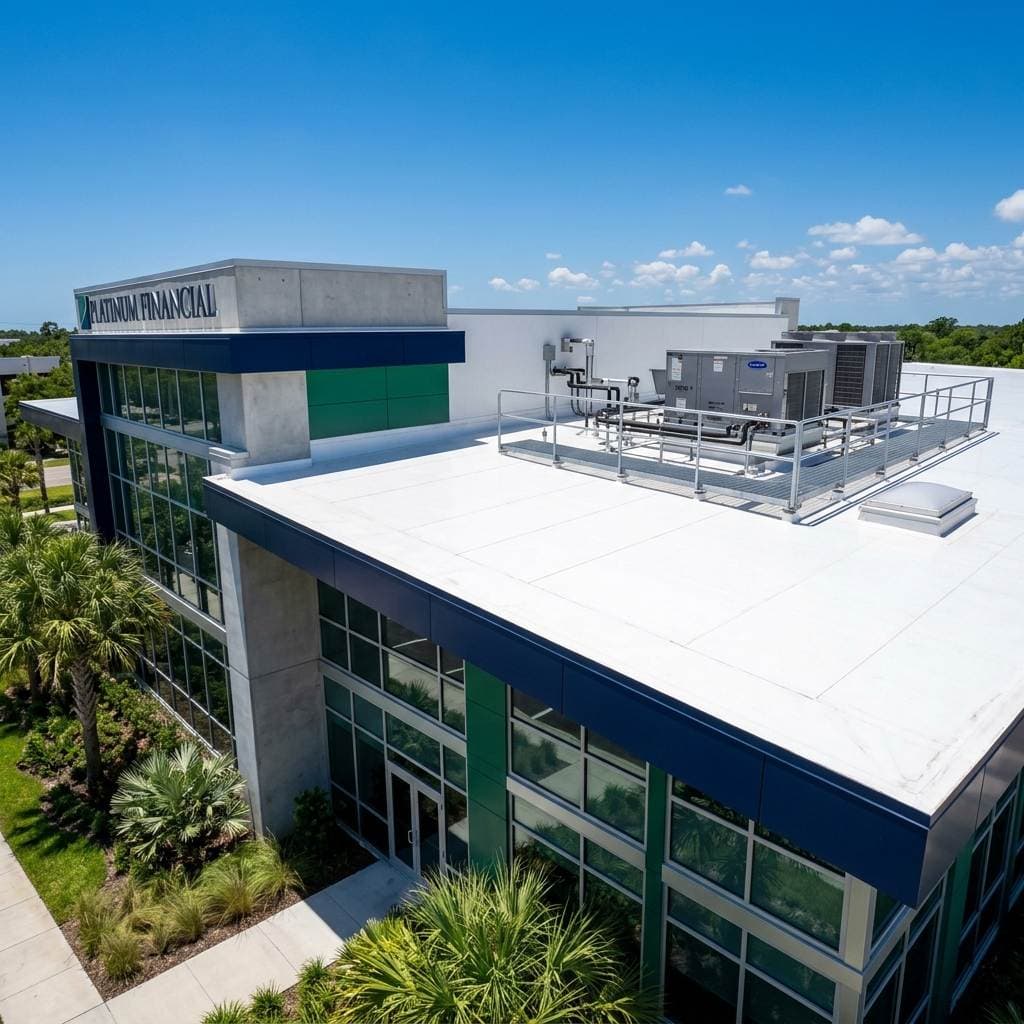
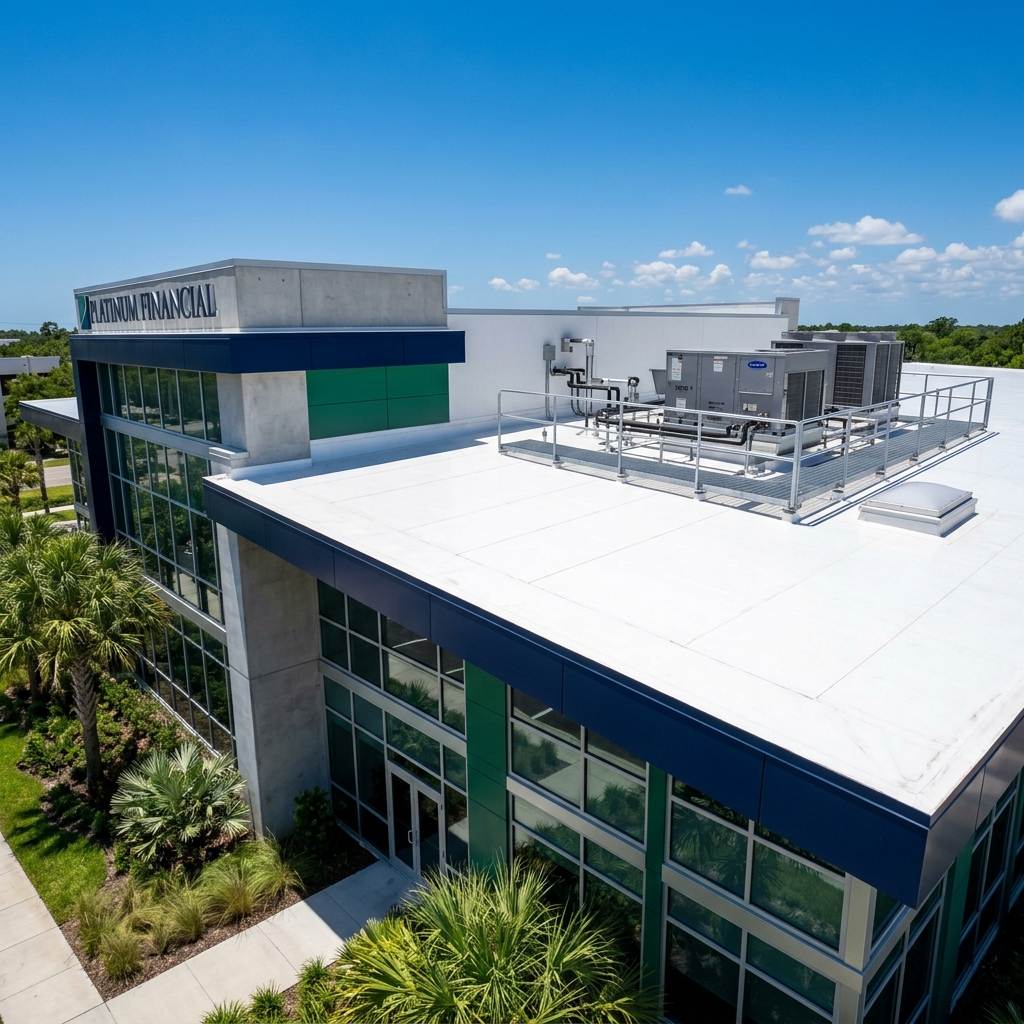
- The Cool Roof Defense: Highly reflective white membranes—such as commercial TPO roofing systems—reflect over 80% to 85% of solar rays back into the atmosphere. The surface temperature of a white cool roof rarely exceeds 100°F to 105°F—a staggering 60°F to 80°F reduction in rooftop heat.
┌─────────────────────────────────────────────────────────────┐
│                 ROOFTOP SURFACE TEMPERATURE COMPARISON      │
├─────────────────────────────────────────────────────────────┤
│ Black EPDM / Dark Modified Bitumen:  165°F - 180°F (Hot!)   │
│ Aged Gray Gravel Built-Up Roof:      135°F - 150°F (Warm)   │
│ White Reflective TPO / Silicone:     95°F - 105°F  (Cool!)  │
└─────────────────────────────────────────────────────────────┘
4 Tangible Ways Commercial Cool Roofs Cut Overhead
Installing an engineered cool roof generates significant financial returns across multiple operational categories:
1. 20% to 30% Reductions in AC Electricity Usage
Because a cool roof blocks thermal conduction through the building envelope, interior temperatures remain stabilized. Facility managers report immediate 20% to 30% drops in air conditioning kilowatt-hour (kWh) consumption, saving thousands of dollars per month on retail centers and conditioned warehouse facilities.
2. Relieving Thermal Head Pressure on Rooftop Units (RTUs)
Commercial HVAC rooftop units draw air from the immediate microclimate surrounding the compressor cabinet.
- When an RTU draws in 160°F air bouncing off a black roof, the compressor struggles to reject indoor heat, running at elevated head pressures that trigger thermal tripping and premature motor burnouts.
- Surrounding your RTUs with a cool, 100°F white membrane allows condensing coils to operate at peak thermodynamic efficiency, extending commercial HVAC compressor life by 4 to 7 years.
3. FPL Business Energy Rebates
Florida Power & Light (FPL) actively incentivizes commercial property owners to reduce grid demand through its Business Energy Solutions Reflective Roof Rebate. Commercial properties that install approved roofing materials meeting minimum Solar Reflectance Index (SRI) standards can receive direct cash-back incentives from the utility, offsetting upfront installation costs.
4. Downsizing Future HVAC Replacement Capacities
When replacing aged air handlers and chillers, cooling capacity is sized in tonnage based on peak building thermal loads. A cool roof permanently lowers your facility’s peak heat gain, allowing mechanical engineers to specify smaller-tonnage HVAC systems, saving tens of thousands of dollars on future mechanical replacements.
Commercial Roofing Membrane Thermal Performance Comparison
| Membrane Material & Color | Initial Solar Reflectance | Thermal Emittance | Solar Reflectance Index (SRI) | Typical Peak Surface Temp |
|---|---|---|---|---|
| White High-Solids Silicone Coating | 0.88 (88%) | 0.90 (90%) | 115 (Maximum Cool) | 95°F – 102°F |
| Bright White TPO (60-mil) | 0.79 (79%) | 0.90 (90%) | 102 (High Efficiency) | 100°F – 108°F |
| White PVC Single-Ply | 0.83 (83%) | 0.92 (92%) | 104 (High Efficiency) | 98°F – 105°F |
| Aged Gravel-Surfaced BUR | 0.34 (34%) | 0.86 (86%) | 37 (Poor) | 140°F – 155°F |
| Black EPDM / Dark Mod-Bit | 0.06 (6%) | 0.86 (86%) | 0 – 5 (Extreme Heat Trap) | 165°F – 180°F+ |
Compare single-ply options with our detailed guide on commercial roof coatings and fluid restoration.
Upgrade to a High-Efficiency Commercial Cool Roof
Whether you operate a climate-controlled distribution center in Riviera Beach, a medical plaza in Jupiter, or an industrial park in Stuart, transforming your commercial roof into a solar reflector provides immediate, measurable cash flow improvements.
Diversified Roofing Solutions is South Florida's trusted leader in high-performance commercial roofing installations and reflective roof restorations.
Contact our commercial energy roofing division at (561) 841-5676 or request an on-site commercial cool roof evaluation to calculate your facility's projected energy savings.