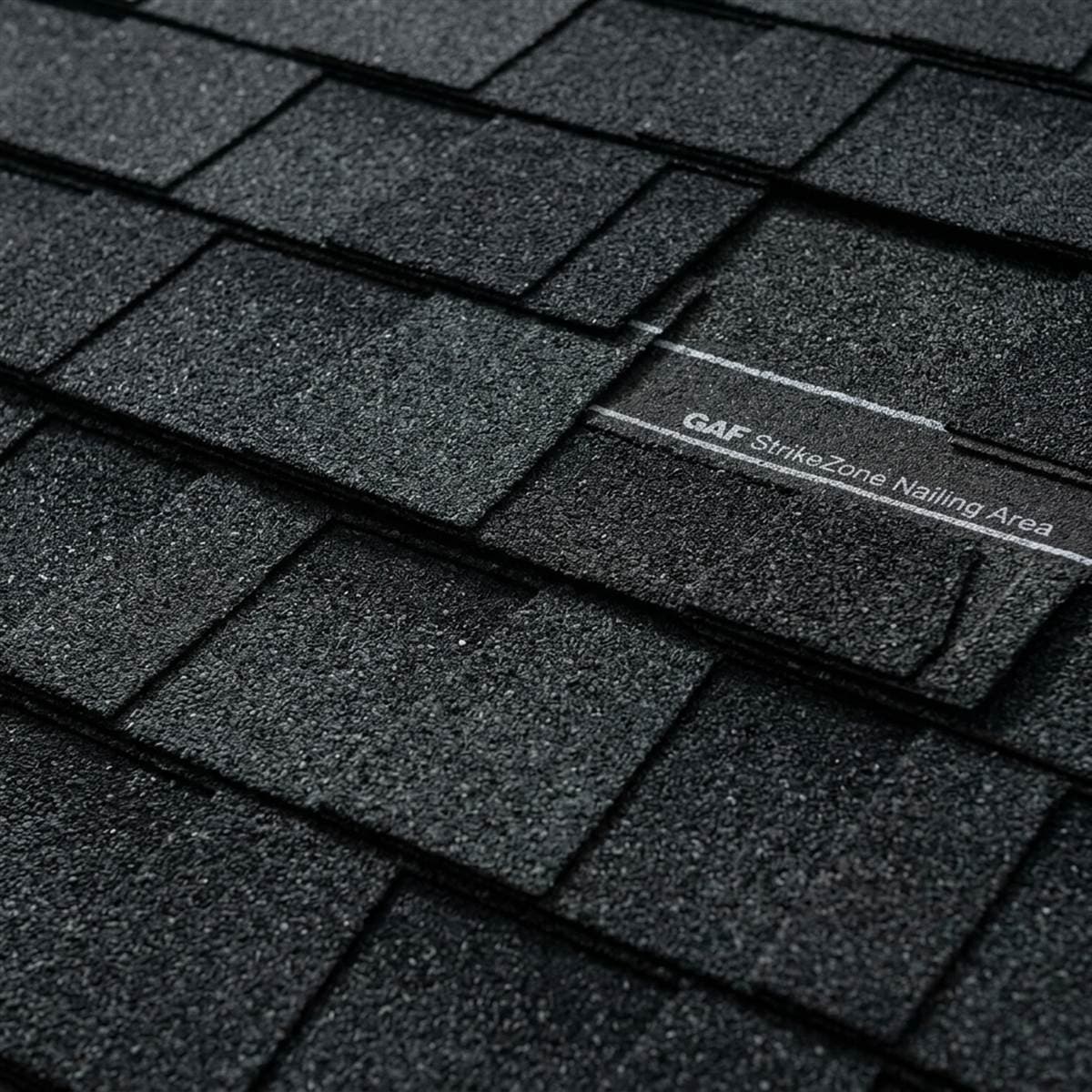
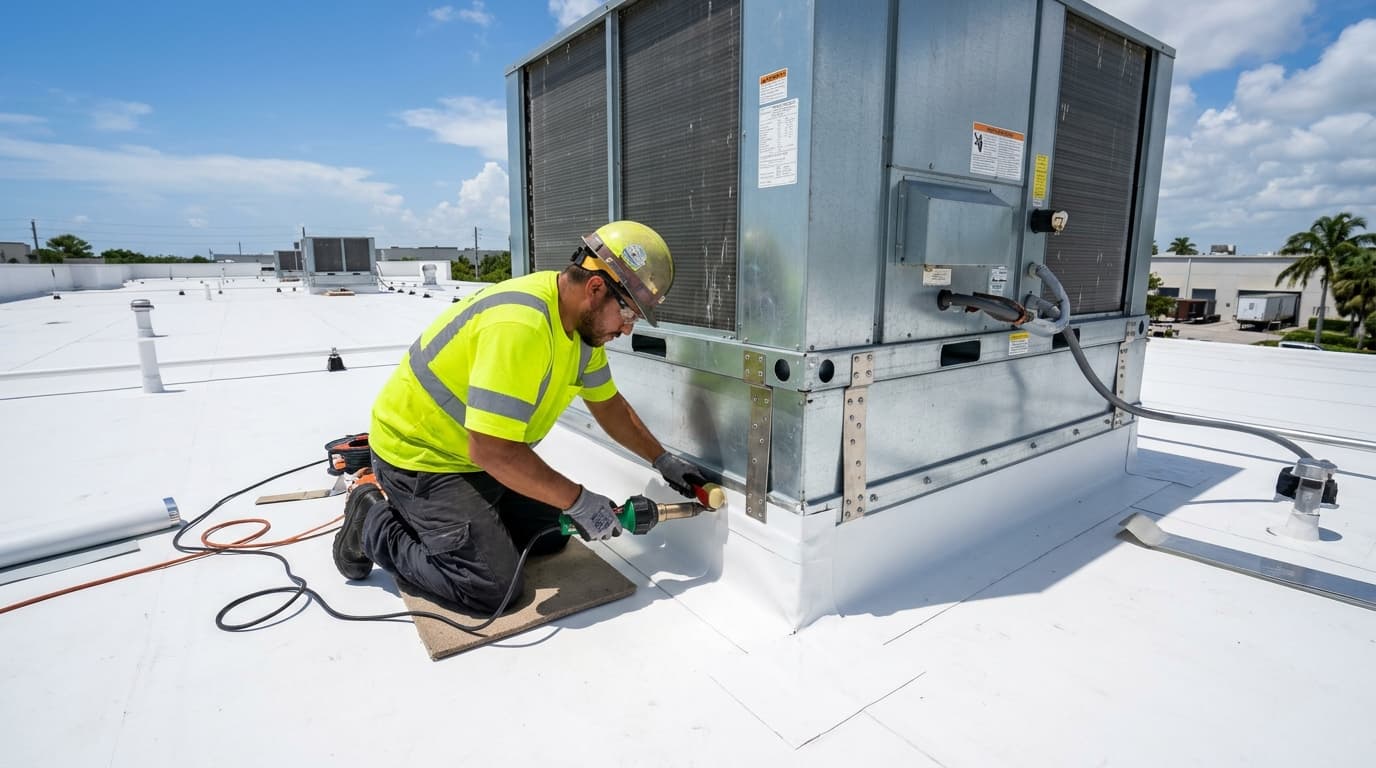
Ask any commercial facility director in Palm Beach or Martin County where their chronic ceiling stains originate, and eight times out of ten the finger points directly at a Rooftop Package Unit (RTU). Commercial roof HVAC curb flashing leaks account for roughly 78% of all emergency commercial service calls across South Florida—not because modern TPO, PVC, or modified bitumen membranes fail in the open field, but because the intersection between vibrating mechanical equipment and a waterproof roof assembly is frequently botched by uncoordinated trades.
When a mechanical contractor replaces a 10-ton rooftop air conditioner in West Palm Beach, Jupiter, or Boca Raton, their priority is getting cold air flowing and passing the municipal mechanical wind-load inspection. Unfortunately, how they bolt down that unit often destroys your roof's waterproofing envelope and voids your manufacturer warranty. Here is how to diagnose and permanently eliminate commercial roof HVAC curb flashing leaks.
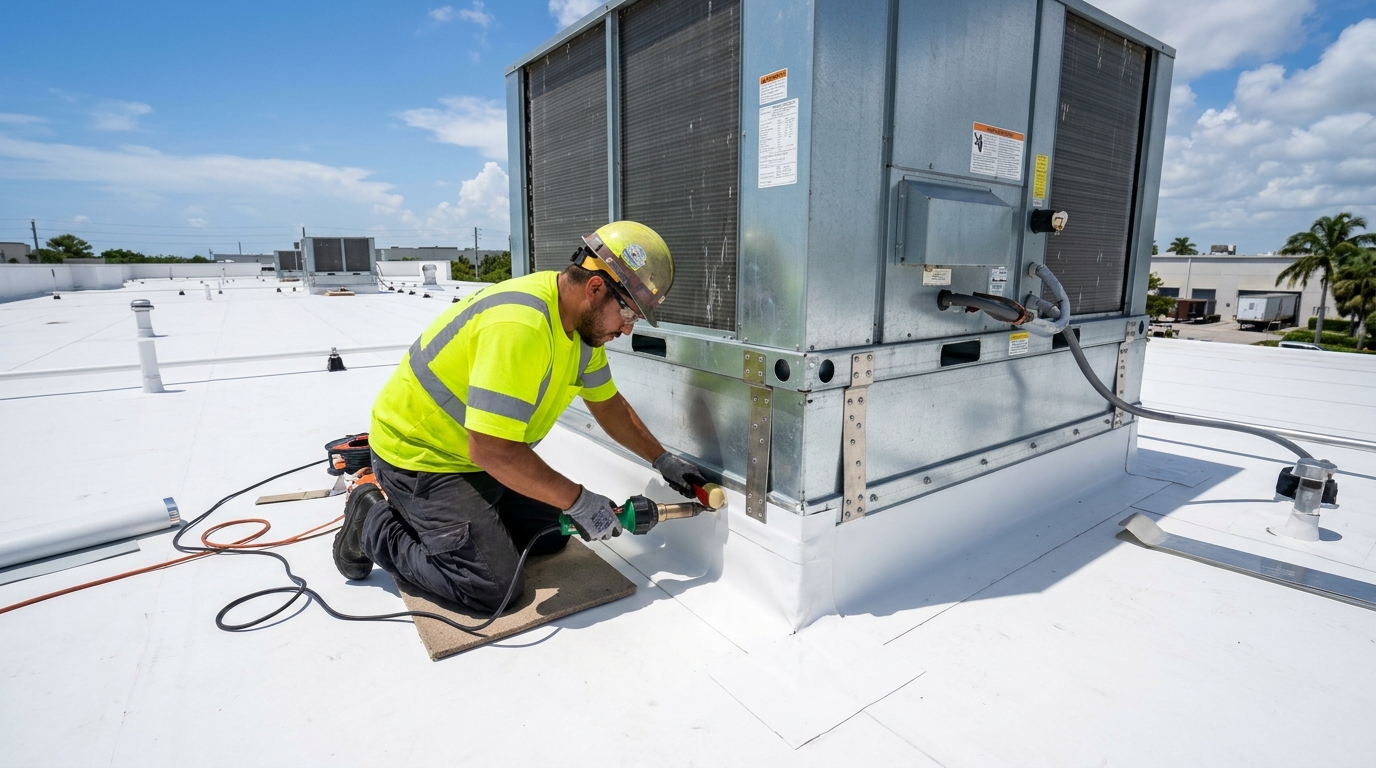
Commercial roof HVAC curb flashing leaks in South Florida are predominantly caused by HVAC technicians screwing hurricane tie-down straps straight through vertical membrane flashings, cracked pourable pitch pans around vibrating refrigerant lines, and low curb heights (<8 inches) submerged by tropical downpours. Permanent repair requires raising curbs to 12–14 inches, heat-welding reinforced corner boots, and replacing pitch pockets with PMMA fleece-reinforced liquid flashings.
Requires all rooftop mechanical equipment, fans, and curb adapters to be structurally anchored to resist ASCE 7 hurricane wind uplift and overturning forces while maintaining a minimum 8-inch waterproof vertical counterflashing termination above the finished roof plane.
The 4 Root Causes of Commercial Roof HVAC Curb Flashing Leaks
When our commercial forensics team inspects a leaking RTU or exhaust fan curb in Palm Beach Gardens or Stuart, we consistently uncover one of four mechanical-vs-roofing conflicts:
- 1. The "Hurricane Strap Screw" Puncturing the Base Flashing: Under FBC Mechanical Section 301.15, every new rooftop AC unit in South Florida must be secured to the curb with heavy-gauge galvanized or stainless steel hurricane tie-down straps calculated by a P.E. When AC installers screw the bottom of those metal straps directly into the side of the wood/steel curb below the counterflashing skirt, they drive 12 to 24 unsealed sheet-metal screws straight through your TPO or modified bitumen vertical base flashing. During the next driving rainstorm, water wicks straight down the screw threads into the building.
- 2. Buried Low Curbs After Tapered Insulation Upgrades: When a commercial roof is reroofed with code-required R-25 or R-30 polyiso insulation (which adds 4.5 to 5.2 inches of height to the roof deck), an existing 8-inch HVAC curb is suddenly reduced to just 3 inches of exposed flashing height. In a 4-inch-per-hour Florida deluge, wind-driven water cascades right over the top of the curb under the AC unit skirt.
- 3. Vibrating Pitch Pans & Electrical Conduit Penetrations: High-pressure copper refrigerant linesets and electrical whip conduits vibrate continuously whenever the AC compressor cycles on. Traditional metal pitch pans filled with aged mastic shrink and pull away from the copper tubing within 24 months, creating a direct funnel into the ceiling plenum.
- 4. Punctured Service Walkways & Dropped Sheet-Metal Screws: HVAC maintenance technicians servicing clogged condensate pans or swapping filters frequently drop sharp self-tapping Zip screws onto the roof membrane—and then step on them, punching clean holes through single-ply membranes.

Engineering Comparison: Temporary AC Patch vs. Code-Compliant Curb Rebuild
| Curb Component | Common Failing Condition | Permanent FBC / NRCA Commercial Upgrade | Expected Leak-Free Lifespan |
|---|---|---|---|
| Vertical Curb Height | 3" – 5" above membrane (Submerges in heavy rain) | 12" – 14" Insulated Curb Extension during reroof or RTU swap | 25 – 30+ Years |
| Corner Flashing Detail | Field-cut slits smeared with degraded caulk | Pre-molded heat-welded universal TPO/PVC corners + 60-mil reinforced skirt | 20+ Years (NDL Warranty Grade) |
| Refrigerant Lineset Seal | Cracked asphalt pitch pocket | Stainless Gooseneck ("Doghouse") or PMMA Fleece Liquid Flashing | 20+ Years (Zero pitch pan maintenance) |
| Hurricane Tie-Down Straps | Screwed through membrane base flashing | Structural curb-top rail adapter or counter-flashed EPDM gasketed mounts | 175+ MPH Wind + 100% Watertight |
| Service Foot-Traffic Zone | Bare membrane punctured by dropped screws | Heat-welded 120-mil textured commercial walkway pads around all 4 sides | Prevents 95% of maintenance punctures |
Don't Let an HVAC Replacement Void Your Commercial Roof Warranty
If your commercial building or HOA clubhouse is covered by a 15-year or 20-year manufacturer No-Dollar-Limit (NDL) warranty from GAF, Carlisle, Johns Manville, Sika Sarnafil, or Mule-Hide, allowing an HVAC contractor to cut into the roof membrane or install a curb adapter without an authorized roofing contractor on-site immediately voids the warranty around that unit.
At Diversified Roofing Solutions, we coordinate directly with commercial mechanical contractors and crane operators across Palm Beach and Martin County. While the crane lifts the old RTU off the curb, our commercial roofing crew:
- Inspects and replaces any condensation-rotted wood nailers on the structural curb.
- Installs an insulated curb extension if vertical clearance is below 8 inches.
- Heat-welds brand-new membrane flashing, universal corners, and heavy-duty walkway pads around the unit.
- Waterproofs all hurricane tie-down brackets and electrical conduits to preserve your manufacturer warranty.
Experiencing active commercial roof HVAC curb flashing leaks or planning an upcoming RTU crane swap? Contact our commercial roofing division for rapid leak diagnostics and curb waterproofing.