When installing a flat roofing system in South Florida, adhering to the strict commercial wind load requirements dictated by the Florida Building Code is essential to prevent structural wind damage. The region's unique geographical positioning exposes buildings to extreme wind pressures during major hurricanes. Under the current building code, understanding how commercial wind load requirements vary across Palm Beach, Broward, and Martin counties is a critical engineering step. Properly calculated commercial wind load requirements determine deck attachment spacings, perimeter fastening densities, and wind-uplift limits.
How Do You Calculate Commercial Wind Load Requirements in South Florida?
Determining the exact commercial wind load requirements for any structure involves evaluating its wind zone, roof height, and structural exposure category. High-velocity hurricane zones (HVHZ) require specialized calculations to resist massive suction pressures.
By partnering with certified specialists who install high-performance commercial TPO roofing systems designed for high-wind loads, building owners ensure their systems pass all local structural engineering reviews and field inspections.
Wind Velocity Zones and Contour Charts
Local building departments reference wind-velocity contour charts to establish the base wind speed for design calculations. For waterfront properties, commercial wind load requirements are significantly higher due to open exposure categories. Ensuring compliance with these regional commercial wind load requirements is standard practice for coastal developments.
- Wind Zone 4 (HVHZ): Broward and Miami-Dade counties require roofs to resist wind speeds of 170-180 mph.
- Wind Zone 3: Palm Beach County requires design speeds ranging from 160-170 mph.
- Exposure Category D: Waterfront properties within 600 feet of the ocean face maximum wind suction forces.
How Are Fastening Patterns Engineered to Meet Wind Loads?
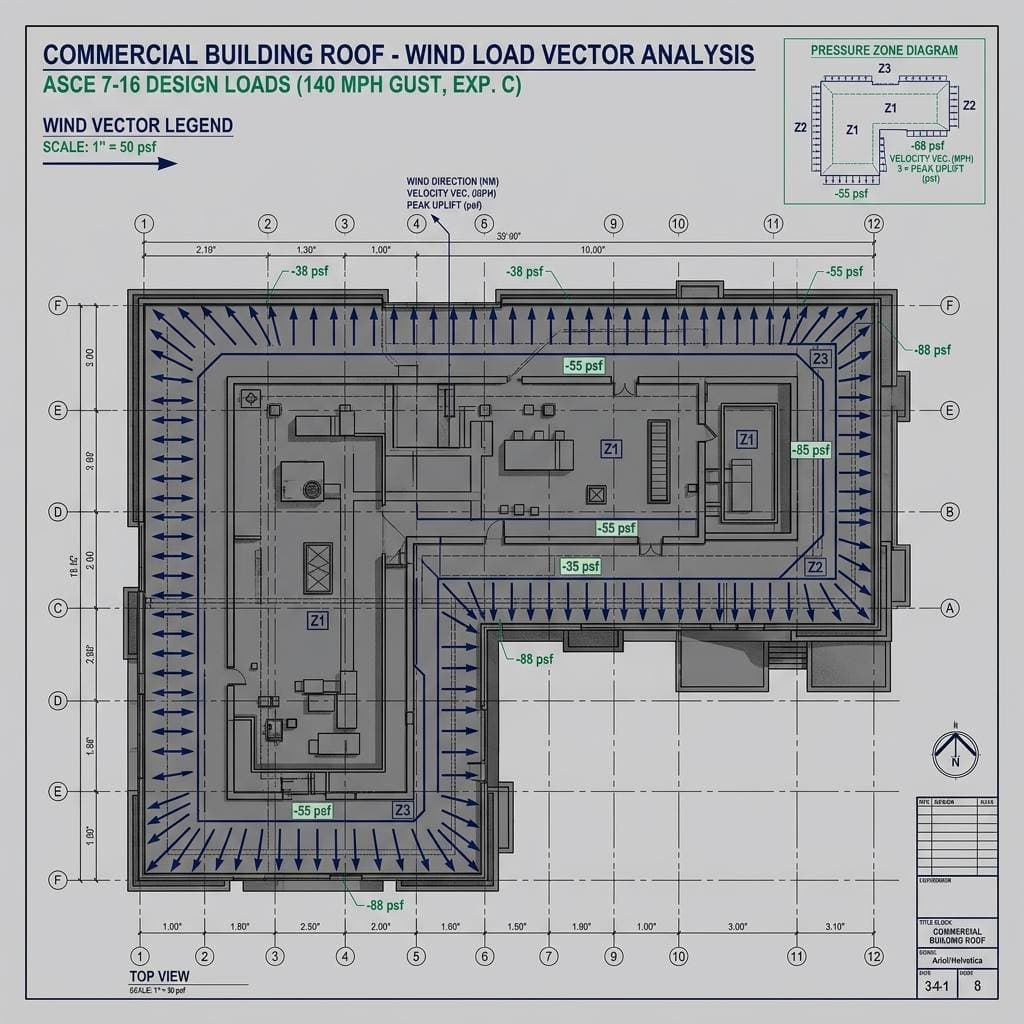
To satisfy strict commercial wind load requirements, engineers specify tight mechanical fastening patterns along the roof perimeter and corners. Wind suction forces are highest at structural corners, making perimeter density critical to prevent sheet peel failures.
- Field Zone (Zone 1): The interior roof surface, requiring standard fastener spacing.
- Perimeter Zone (Zone 2): Elevated suction forces require up to 50% tighter fastener density.
- Corner Zone (Zone 3): Maximum wind pressure requires the tightest plate spacing to resist sheet tearing.
What Are the TAS 125 Compliance and Product Approval Guidelines?
All roofing materials must hold active Product Approvals verifying their ability to meet commercial wind load requirements. Under TAS 125 testing protocols, components are evaluated under constant and oscillating pressures. Working with certified installers ensures your commercial wind load requirements are met using approved materials.
What Is the Role of Substrate and Deck Integrity?
The strength of the structural deck determines whether the system can transfer wind forces safely to the structural frame. If a deck is damaged by rot, it cannot meet commercial wind load requirements, leading to structural failure. Repairing weak deck sections is essential to satisfy commercial wind load requirements during inspections.
How Do Wind Mitigation Inspections Qualify for Insurance Credits?
Completing a wind mitigation inspection certifies that your commercial flat roof meets all current commercial wind load requirements. This verification helps property owners qualify for significant discounts on their building insurance premiums.
What Are the Wind Load Exposure & Zone Criteria?
The following table summarizes the structural design parameters required for flat roofs under the Florida Building Code:
| Geographic Exposure Category | Base Design Wind Speed | HVHZ Compliance Required | Corner Fastening Density | Insurance Mitigation Credit |
|---|---|---|---|---|
| Exposure C (Inland) | 140 - 150 MPH | No (Except specific zones) | Moderate (Every 12" o.c.) | Standard Credit |
| Exposure D (Coastal < 600ft) | 160 - 170 MPH | Yes (Palm Beach / Martin) | High (Every 6" o.c.) | Maximum Discount |
| Exposure HVHZ (Broward) | 170 - 180 MPH | Yes (Mandatory) | Elite (Every 6" o.c. + Adhesive) | Maximum Discount |
What Is the Best Strategy for Flat Roof Wind Loads?
Meeting strict structural codes is the best way to safeguard South Florida commercial properties from catastrophic storm damage. Proactive planning ensures your building complies with all commercial wind load requirements, protecting occupants and capital. Consult with a licensed commercial roofing partner to evaluate your structure and ensure all commercial wind load requirements are satisfied.
Local Service & Contact Signals
Diversified Roofing Solutions provides certified flat roof inspections, maintenance, and installations across South Florida. Contact our Jupiter headquarters for emergency support or a free commercial flat roof assessment.
Diversified Roofing Solutions, Inc.
📍 1829 Park Ln S, Suite 8, Jupiter, FL 33458
📞 (561) 841-5676
✉️ info@diversifiedroofingfl.com
Local Service Areas & Regional Coverage
Diversified Roofing Solutions provides certified residential and commercial roofing services across South Florida and the Treasure Coast, including Palm Beach County, Martin County, Broward County, and St. Lucie County.