When you need to cover a massive flat commercial roof in South Florida, the battle of TPO vs. PVC is the heaviest decision you will make. Both materials are heat-welded thermoplastic single-ply membranes. Both deliver bulletproof water resistance and blinding solar reflectivity. But underneath, they are completely different animals. They feature different chemical structures, puncture thresholds, and tolerances for industrial exhaust. For commercial building managers across Palm Beach, Martin, and Broward counties, knowing the raw facts about TPO vs. PVC prevents a costly, premature roof failure.
Table of Contents
- What Is TPO vs. PVC and Why Compare Them?
- Evaluating Chemical Resistance and Environmental Durability
- Comparing Installation Costs and Lifetime Performance
- How Do Wind Uplift and Tear Strengths Compare in Hurricanes?
- What Maintenance Protocols Prolong Single-Ply Membrane Lifespans?
- Related Services
What Is TPO vs. PVC and Why Compare Them?
 A hard look at TPO vs. PVC reveals the truth. TPO (Thermoplastic Polyolefin) is a tough rubber-blend polymer. PVC (Polyvinyl Chloride)? It's a reinforced plastic packed with chemical plasticizers. PVC dominates when you need hardcore chemical resistance. TPO steps up as the ultimate budget-friendly, highly reflective option for massive square footage.
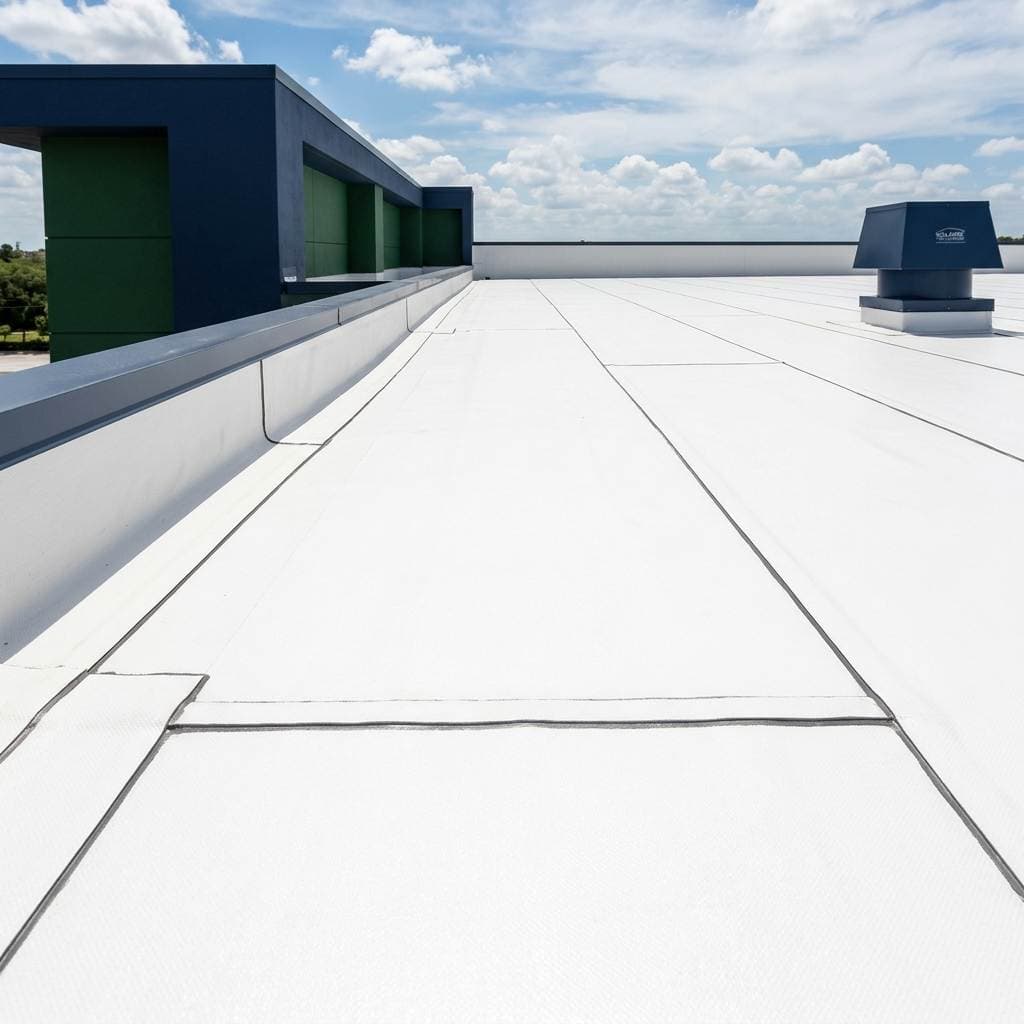
Our crews hot-air weld the seams of both membranes at over 1,000 degrees. This forms a continuous, monolithic waterproof armor across your low-slope roof.
The Chemical Foundations of Single-Ply Membranes
Breaking down the polymer structures is step one in any TPO vs. PVC showdown. PVC relies on heavy chlorine molecules to deliver natural flame-retardant properties. TPO? It requires specialized flame-retardant additives mixed into the rubber. Picking the right membrane during a TPO vs. PVC audit depends entirely on what your HVAC units and exhaust vents are spewing onto the deck.
- TPO Formulation: Ethylene-propylene rubber polymerized with polypropylene.
- PVC Formulation: Vinyl chloride polymer enhanced with plasticizers and stabilizers.
- Reinforcement Scrim: Polyester yarn grids provide tensile and tear resistance in both.
Evaluating Chemical Resistance and Environmental Durability
Got a roof loaded with restaurant grease vents or industrial exhaust hoods? Your TPO vs. PVC choice is already made. PVC membranes laugh at animal fats, heavy oils, and toxic chemical residue. They won't break down, making PVC the undisputed king of industrial and restaurant settings.
If hot grease hits a TPO membrane, it's game over. The rubber swells, softens, and degrades immediately. You will have catastrophic leaks in months.
Puncture Resistance and UV Aging
Manufacturers subject both membranes to brutal accelerated UV testing to ensure they survive Florida's extreme sunlight. During our local TPO vs. PVC field audits, we see high-quality TPO sheets resisting weathering and UV rot exceptionally well. PVC, however, can turn brittle over decades as those chemical plasticizers bake out. Running a local TPO vs. PVC inspection with our veteran roofers helps you spot material degradation before the deck rots.
Comparing Installation Costs and Lifetime Performance
Cost dictates everything when comparing TPO vs. PVC for massive warehouse properties. TPO rolls out about 15% to 25% cheaper than PVC. That heavy discount makes TPO incredibly attractive for developers focused on fast capital amortization.
Check the hard engineering specs below to see exactly how these single-ply membranes fight it out on the roof.
| Performance parameter | TPO (Thermoplastic Polyolefin) | PVC (Polyvinyl Chloride) | Best South Florida Application |
|---|---|---|---|
| Material Base Cost | Economical ($ - $$) | Premium ($$ - $$$) | Warehouses & Retail (TPO) |
| Chemical/Grease Resistance | Poor (degrades with grease) | Excellent (oil resistant) | Restaurants & Plants (PVC) |
| Solar Reflectance Index (SRI) | Initial: 90 - 95 | Initial: 85 - 90 | High-heat urban properties |
| Seam Strength Method | Hot-Air Welded (1,000°F+) | Hot-Air Welded (1,000°F+) | High-Wind HVAC Zones |
| Average Service Lifespan | 20 - 25 Years | 30+ Years | Long-term capital holdings |
| Flexible Temperature Range | Excellent (no plasticizer loss) | Good (risk of brittle aging) | High-UV environments |
Average Life Expectancy and Warranty Coverage
PVC boasts a longer historical track record pushing 30+ years, but modern TPO systems easily lock in 20 to 25 years of brutal service. Property managers weighing TPO vs. PVC have to balance the steep upfront cost of PVC against its raw chemical resistance and extended lifespan.
How Do Wind Uplift and Tear Strengths Compare in Hurricanes?
South Florida's extreme wind contours force all thermoplastic membranes to pass ruthless wind uplift testing. Inside high-velocity hurricane zones, the TPO vs. PVC debate shifts directly to mechanical fastening patterns and heavy adhesive bonding strength.
Both materials deliver massive wind ratings when our crews lock them down with heavy-duty induction-welded plates or full-spread bonding adhesive.
What Maintenance Protocols Prolong Single-Ply Membrane Lifespans?
Aggressive preventative care stops seam separations and ponding water issues dead. In any TPO vs. PVC scenario, running regular inspections and chemical washes keeps solar reflectivity high and stops seam cracking.
Property managers must aggressively clear out drains and inspect flashing boots immediately after every major hurricane to protect those expensive manufacturer warranties.
Repairing and Patching Single-Ply Roofs
Aged PVC stays weldable. We can run hot-air equipment over a 15-year-old PVC roof and drop a patch fast. Aged TPO? It fights back. It requires heavy chemical cleaning and priming before a new patch will bite. That's a massive factor in long-term TPO vs. PVC maintenance audits. Evaluating the realities of TPO vs. PVC before you pull a permit ensures you get a repairable, cost-effective system.
Related Services
To explore heavy-duty commercial single-ply options, hit these links:
- Learn about our premium Commercial Roofing services for flat and low-slope decks.
- Request an inspection or a repair bid for TPO Flat Roof Replacements.
- Schedule a consultation for a chemical-resistant PVC Roof Installation.
- Extend membrane longevity with elastomeric Acrylic Roof Coatings.
🎨 Image Generation Prompt
AI Image Prompt: A clean, high-contrast architectural photograph of a commercial flat roof featuring a heat-welded white TPO membrane. The image shows the precise welded seams under the bright Florida sun. Minimalist, geometric composition utilizing a professional navy blue and deep green brand color theme, low perspective, sharp detail.
[!TIP] Planning a Roof Replacement? Use our interactive Florida Roof Replacement Cost Calculator to get an instant satellite measurement and pricing estimate for your property.
Local Service Areas & Regional Coverage
Diversified Roofing Solutions provides certified residential and commercial roofing services across South Florida and the Treasure Coast, including Palm Beach County, Martin County, Broward County, and St. Lucie County.