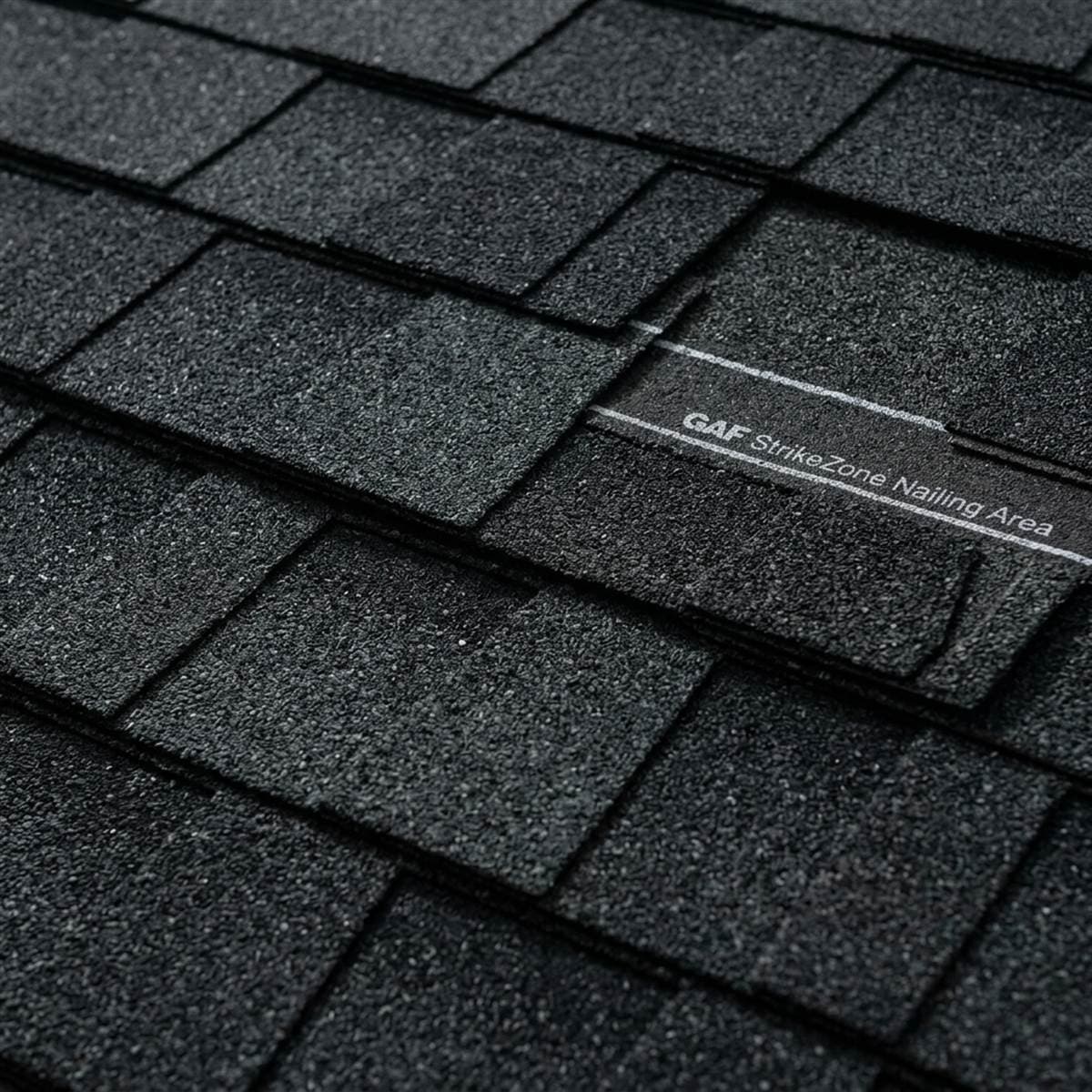
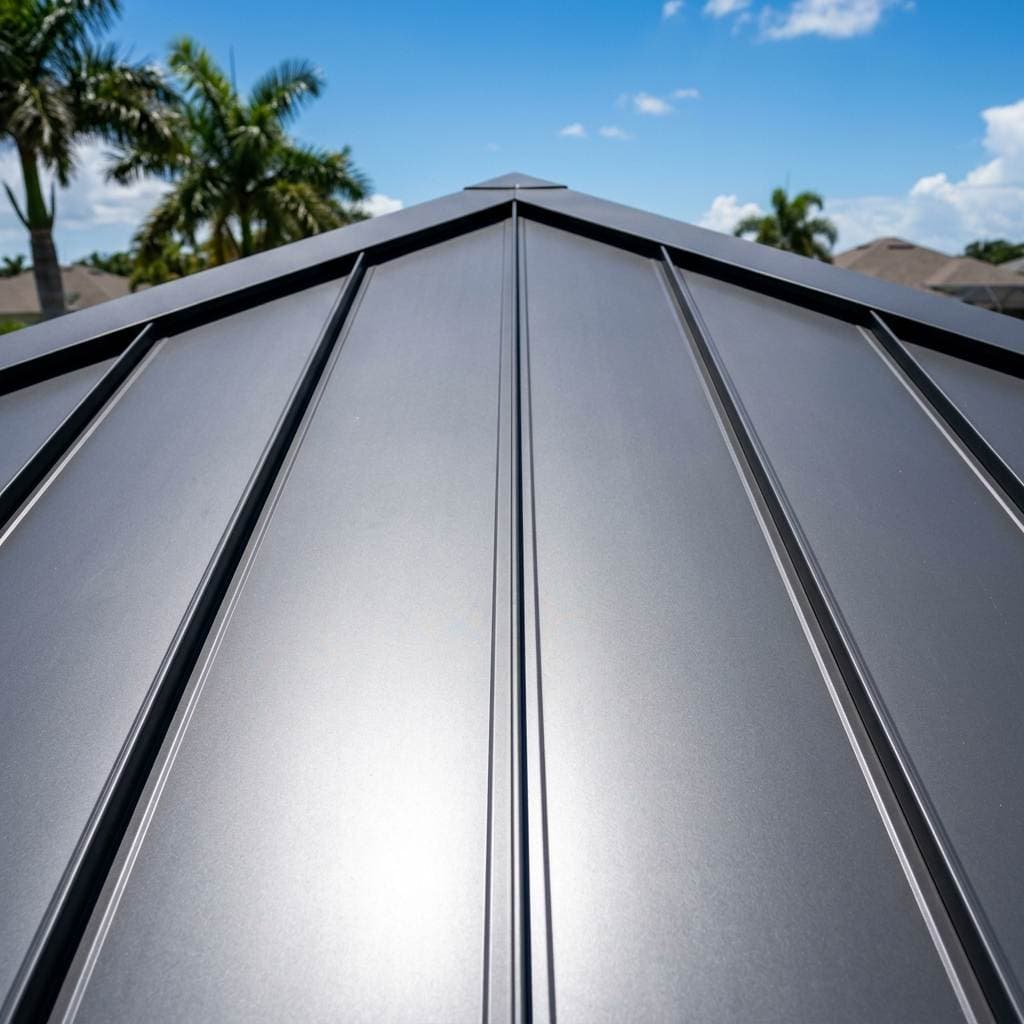
Those thousands of neat exposed screws on a brand-new 5V crimp metal roof look fine on installation day—until 10,000 tiny rubber washers dry-rot and crack under the relentless Florida sun.
Metal roofing has surged in popularity across Palm Beach, Martin, and Broward counties. Homeowners love the sleek modern profile, 50-year longevity, and outstanding hurricane resistance. However, when gathering contractor bids, property owners are frequently presented with two radically different metal options: standing seam vs 5V crimp metal roofs.
While 5V crimp offers an attractive upfront price tag, choosing an exposed screw profile in South Florida’s high-salt, high-UV environment often leads to premature failure and costly exposed fastener metal roof leaks.
Below is an honest, contractor-grade comparison examining fastener engineering, wind uplift performance, coastal corrosion, and overall lifecycle return on investment to determine the best metal roof for Florida hurricanes.
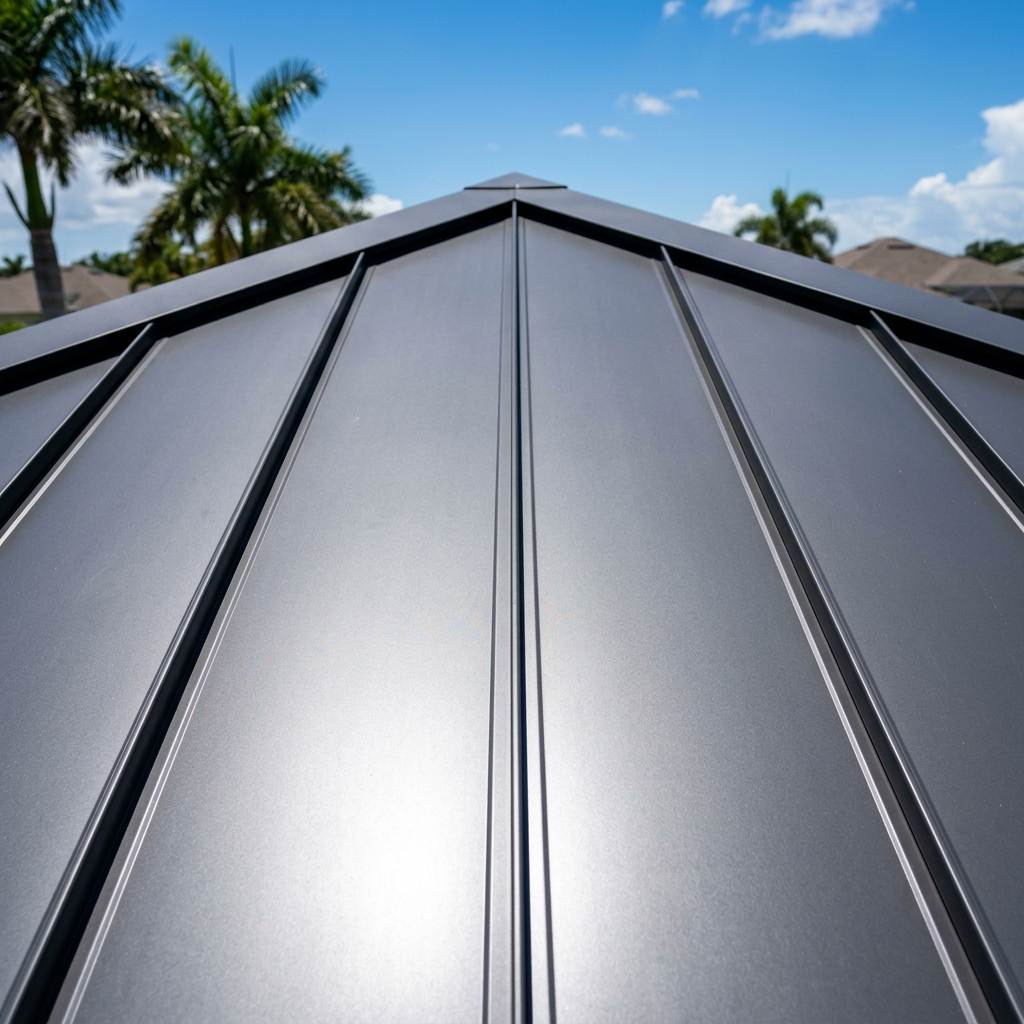
Fastener Engineering: Concealed Clips vs. Exposed Screws
The fundamental difference between these two systems comes down to a single engineering principle: do the fasteners penetrate the exterior weather barrier?
CONCEALED FASTENER (STANDING SEAM):
┌───────────────────────────────────────────────┐
│ Raised Seam ──┐                               │
│               │ (Interlocking Hemmed Joint)   │
│         [Concealed Clip & Screws Protected]   │
│ ───────────────────────────────────────────── │
│  NO HOLES PENETRATING THE METAL WEATHER FACE  │
└───────────────────────────────────────────────┘

EXPOSED FASTENER (5V CRIMP / CORRUGATED):
┌───────────────────────────────────────────────┐
│ Metal Sheet ──┬───────────────────────────────┤
│               ▼                               │
│      [Screw with Rubber Washer Exposed to Sun]│
│ ───────────────────────────────────────────── │
│ 2,500 - 5,000 SCREW PENETRATIONS INTO THE DECK│
└───────────────────────────────────────────────┘
1. Standing Seam Metal Roofing (Concealed Fastener)
In our standing seam metal roofing installations, continuous vertical panels (12 to 18 inches wide) feature raised interlocking ribs (1.5 to 2 inches high).
- Heavy-gauge stainless steel or coated clips are screwed directly to the plywood deck.
- The adjacent metal panel snaps or is mechanically seamed over the clip, locking the seam permanently.
- Zero screws penetrate the roof surface. The fasteners are 100% sheltered from rain, salt air, and solar ultraviolet radiation.
2. 5V Crimp & Agricultural Panels (Exposed Fastener)
5V crimp panels feature a flat surface punctuated by V-shaped crimps. To hold the panels down against wind uplift, installers drive screws with small neoprene (EPDM) rubber washers directly through the metal face into the decking below.
- On a standard 2,500 sq. ft. South Florida home, a 5V crimp roof requires between 2,500 and 4,500 screw penetrations directly through the metal skin.
- Every single screw represents a potential water entry point.
Why Exposed Fasteners Fail in South Florida's Climate
While 5V crimp performs adequately on barns or inland structures in mild climates, Florida’s coastal weather aggressively destroys exposed screws through two relentless physical mechanisms:
1. Neoprene Washer Oxidation & UV Dry-Rot
Florida experiences some of the highest ultraviolet radiation indices in North America. Within 6 to 8 years, the resilient black rubber washers sealing 5V crimp screws dry out, turn chalky, shrink, and crack. Once the rubber washer fails, rainwater running down the panel slope channels directly into the screw hole, rotting the plywood decking beneath.
2. Thermal Expansion & Elongated Screw Holes
Metal expands when hot and contracts when cool. On an August afternoon in Jupiter or Stuart, metal panels heat up to 165°F before getting hit by a sudden, cooling 70°F tropical rain shower.
- This rapid thermal shock forces metal panels to expand and contract across their length.
- Because 5V crimp panels are pinned rigid to the decking by thousands of screws, the moving metal pushes violently against the fixed screws.
- Over several seasons, this constant rocking motion wallows out (elongates) the screw holes and slowly backs the fasteners out of the wood trusses.
In contrast, standing seam clips are engineered with built-in expansion sliders, allowing the panels to expand and contract freely along their vertical axis without stressing the watertight envelope.
Hurricane Wind Uplift: Standing Seam vs. 5V Crimp
When a Category 4 or 5 tropical storm impacts South Florida, negative pressure uplift rushes over the roof ridge, creating massive suction forces. This is where the debate over the best metal roof for Florida hurricanes is settled.
| Hurricane Resistance Feature | Standing Seam Metal Panels | 5V Crimp Metal Panels |
|---|---|---|
| Florida Building Code (HVHZ) Wind Rating | 180 – 200+ MPH | 130 – 150 MPH |
| Fastener Failure Mechanism | None (Clips grip interlocking seam) | Screws pull through metal or back out |
| Flying Debris Impact Resistance | Class 4 (Maximum impact rating) | Class 3–4 (Punctures can shear screws) |
| Wind-Driven Rain Defense | Hermetically locked double-fold seams | Water penetrates degraded washers |
| Required Maintenance | Minimal (Annual visual inspection) | Mandatory re-screwing every 8–10 years |
During severe storm gusts, 5V crimp panels experience extreme upward suction that concentrates intense shear force against the screw heads. If screw holes have been enlarged by thermal movement, panels can tear completely off the fastener shafts. Standing seam panels distribute wind uplift evenly along continuous vertical clips, making standing seam the undisputed champion for storm survival.
Review our guide on whether your property could survive a South Florida hurricane for full structural details.
Coastal Salt-Air Considerations: Steel vs. Aluminum
If your property is located within 3,000 feet of saltwater—such as along the Intracoastal Waterway, Jupiter Inlet, or coastal Stuart—the fastener metal matters just as much as the profile:
- Standard 5V crimp screws often use zinc-coated carbon steel. In salty air, the microscopic gap between the steel screw and the metal panel triggers galvanic corrosion, creating rusty streaks down the roof within 3 to 5 years.
- For coastal properties, we install marine-grade aluminum standing seam roofing secured with stainless steel clips. Marine-grade aluminum is 100% rustproof, impervious to salt spray, and engineered for lifetime coastal luxury.
Cost Comparison: Upfront Price vs. 30-Year Lifecycle
While 5V crimp is approximately 25% to 35% less expensive on initial installation, the long-term cost equation paints a very different picture:
| 30-Year Ownership Expense | 5V Crimp Metal Roof (2,500 sq. ft.) | Standing Seam Metal Roof (2,500 sq. ft.) |
|---|---|---|
| Initial Installation Cost | $18,500 – $24,500 | $26,000 – $36,500 |
| Year 8–10: Complete Screw Replacement | $3,500 – $5,000 (Replace all washers/oversized screws) | $0 (No exposed screws to replace) |
| Year 16–20: Second Re-Screwing & Leak Repairs | $4,500 – $6,500 (Wood rot repairs + sealants) | $0 |
| Homeowners Insurance Premium Discounts | Moderate (~15–20% discount) | Maximum Tier (~25–35% discount) |
| Estimated 30-Year Total Cost of Ownership | $34,000 – $42,000+ | $26,000 – $36,500 |
| Manufacturer Paint & System Warranty | 20–25 Years | 35–50 Year Non-Prorated Warranty |
When factoring in mandatory re-screwing and superior insurance wind mitigation credits, standing seam is actually the more economical choice over the lifespan of your home.
The Verdict: Which Metal Roof Should You Choose?
- Choose 5V Crimp Only If: You are roofing a detached utility barn, agricultural shed, or carport where minor weeping leaks will not damage drywall ceilings or living quarters, and you plan to budget for regular re-screwing maintenance.
- Choose Standing Seam If: You are roofing a single-family residential home, coastal estate, or commercial building in South Florida where structural hurricane security, zero leak vulnerability, and maximum energy efficiency are non-negotiable.
Ready to explore high-wind metal options for your property? Contact Diversified Roofing Solutions in Jupiter at (561) 841-5676 for an itemized free roofing estimate.