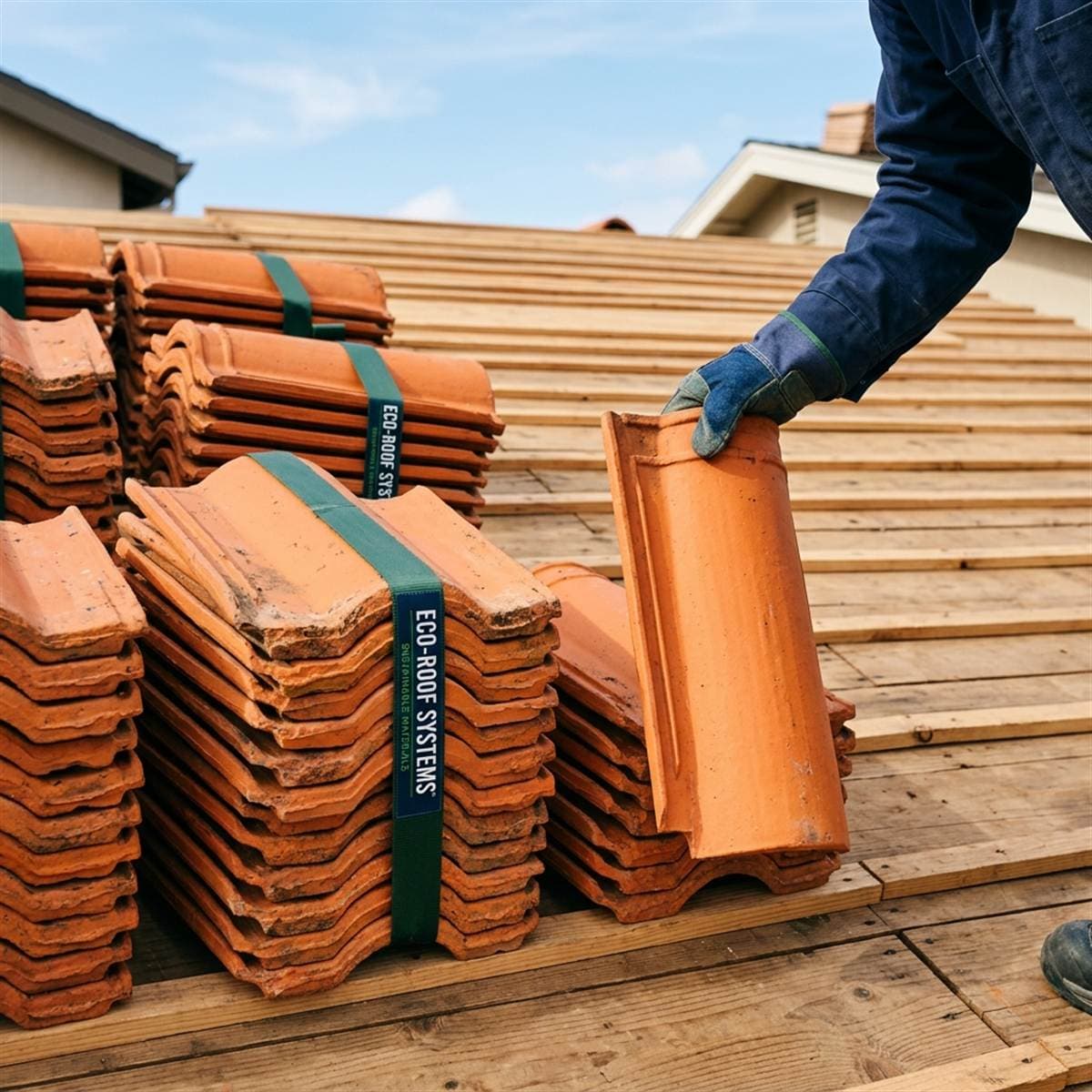
Your concrete or clay tiles can easily last 50 to 80+ years under the Florida sun—but the thin felt underlayment beneath them rarely survives past 18 to 20 years.
Why spend $40,000 to $65,000 buying brand-new tiles when your existing barrel tiles are in excellent structural shape?
Across luxury gated communities in Jupiter, Admirals Cove, Jonathan's Landing, and Palm Beach Gardens, hundreds of homeowners face sudden insurance non-renewals or slow attic leaks. Contractors often push for an exorbitantly expensive full reroof. However, there is a proven, code-approved restoration method that saves tens of thousands of dollars: a tile roof lift and relay in Florida.
By carefully salvaging your original roof tiles and executing a comprehensive tile roof underlayment replacement, you can secure a brand-new 30-year waterproof envelope, pass municipal building inspections, and save money on tile roof replacement.
Why Florida Tile Roofs Fail from the Inside Out
To understand why a tile roof lift and relay in Florida makes so much sense, you have to understand how tile assemblies are built.
In a Mediterranean tile roof, concrete and clay tiles serve as the primary shedding layer and aesthetic shield. They deflect UV rays, absorb impact, and shed bulk rainwater. However, tile roofs are water-shedding systems, not water-tight systems. Wind-driven tropical rain routinely blows beneath the tile contours through ridge channels, hip intersections, and valley pans.
The actual waterproof barrier that keeps your home dry is the underlayment membrane installed directly onto the plywood roof decking.
The Thermal Baking Effect
During South Florida summers, radiant solar heat transforms the air pocket between your tiles and plywood into a thermal oven, with temperatures frequently reaching 140°F to 160°F.
- Legacy 30-lb Organic Felt: Roofs installed prior to modern building codes used traditional paper-based felt underlayments. After 15 to 18 years of intense baking, this felt dries out, curls, turns brittle, and crumbles into black dust.
- The First Tropical Downpour: The tiles look perfectly straight from your driveway. But when tropical winds push rain underneath a shifted tile, the water seeps through cracked felt directly into the plywood substrate.
This is where homeowners face a choice: discard perfectly sound tiles, or execute a targeted tile roof underlayment replacement.
Step-by-Step Breakdown: The Lift and Relay Process
Executing a successful tile roof lift and relay in Florida requires significantly more craftsmanship and care than a standard tear-off. Here is our step-by-step contractor methodology:
Step 1: Careful De-Nailing & Tile Salvage
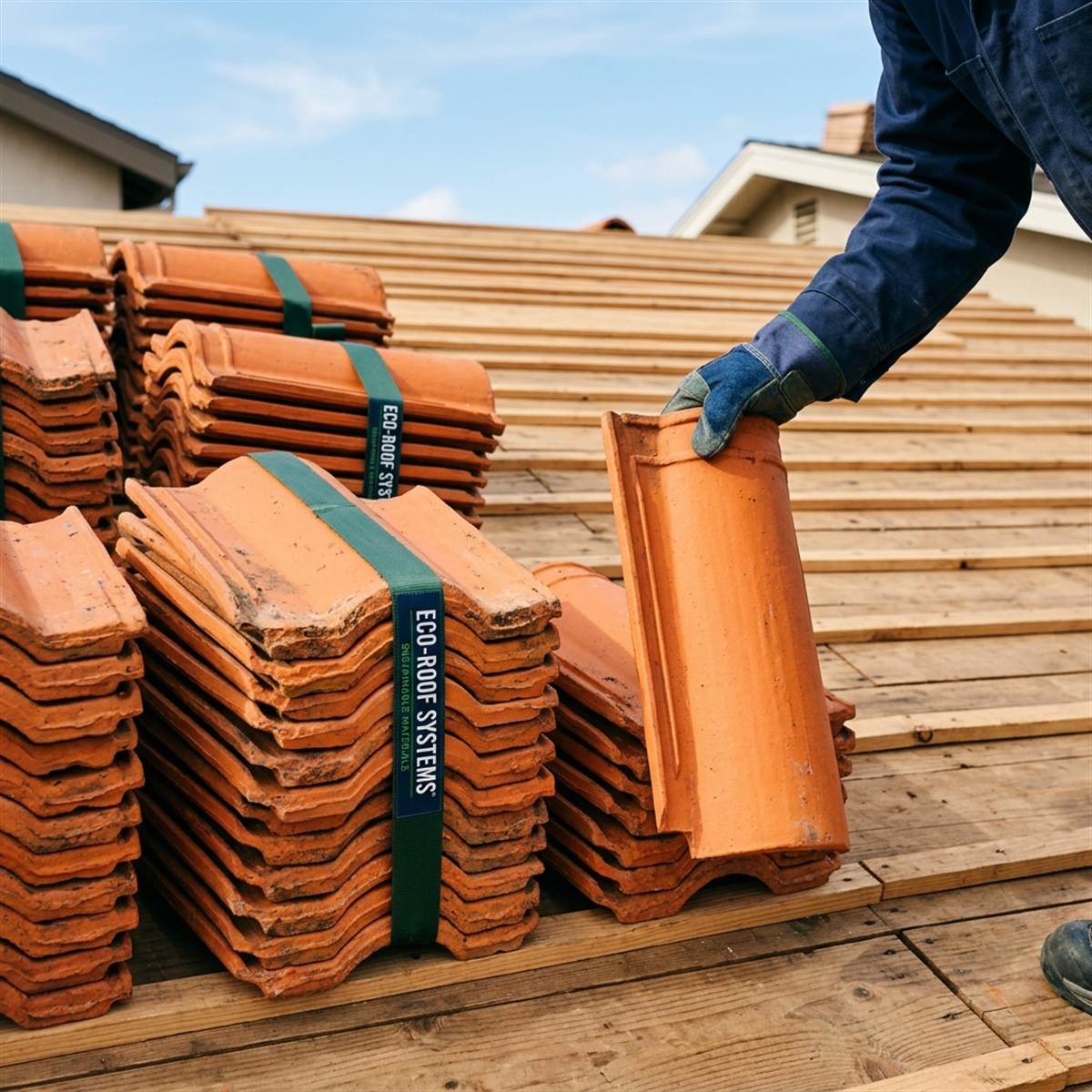
Roofing technicians systematically detach the existing tiles row by row. Each tile is physically inspected for hairline cracks, chips, and structural soundess. Viable tiles are carefully stacked in distributed bundles across the roof framing to prevent overloading rafter trusses.
Step 2: Complete Tear-Off to Raw Plywood Decking
All dried-out felt, corroded tin-tag fasteners, and degraded valley metals are stripped down to the bare wood substrate. The entire plywood deck is swept clean and thoroughly inspected for dry rot, moisture saturation, and termite damage.
Step 3: Deck Re-Nailing to Modern HVHZ Wind Code
To comply with the latest Florida Building Code standards and unlock maximum Florida wind mitigation inspection credits, our crew re-nails the entire roof deck using 8d ring-shank nails spaced every 6 inches on center along panel edges.
Step 4: Installation of High-Temp Secondary Water Barrier (SWR)
We apply a commercial-grade, self-adhering, high-temperature modified bitumen polymer membrane directly to the bare deck. This creates an impermeable secondary water barrier underlayment that self-seals around future fasteners and resists temperatures up to 250°F.
Step 5: Heavy-Gauge Flashing & Valley Metal Upgrades
All rusted galvanized sheet metal in valleys, eaves, rakes, and plumbing penetrations is replaced with heavy-duty 26-gauge prepainted steel, custom copper, or aluminum flashings.
Step 6: Tile Re-Installation with Polyurethane Adhesive Foam
The salvaged tiles are re-installed over the new underlayment. Instead of relying solely on mechanical nails that puncture the waterproofing, we secure field tiles and ridge caps using two-component polyurethane adhesive foam (such as ICP Polyset), certified for high-velocity wind uplift up to 180+ MPH.
Lift & Relay vs. Full Roof Replacement: Cost Comparison
For an average 3,500 sq. ft. single-family estate in Palm Beach County, here is how a tile roof underlayment replacement compares to buying a brand-new tile system:
| Cost & Project Factor | Full Tile Replacement (New Tiles) | Tile Roof Lift & Relay (Salvaged Tiles) | Homeowner Advantage |
|---|---|---|---|
| Material Purchase (Tiles) | $16,000 – $24,000 | $0 (Only 10–15% breakage replacement) | Saves $14,000–$20,000 on materials |
| Tear-Off & Dumpster Disposal | $4,500 – $6,500 (Heavy tile waste) | $2,500 – $3,500 (Felt and metals only) | Lower environmental & dumpster fees |
| Plywood Re-Nailing & SWR Membrane | $8,500 – $12,000 | $8,500 – $12,000 | Identical high-temp storm barrier |
| Skilled Labor & Re-Installation | $12,000 – $16,000 | $15,000 – $18,000 (Detailed handling) | Specialized masonry craftsmanship |
| Total Estimated Project Investment | $41,000 – $58,500+ | $26,000 – $33,500 | Total Savings: $15,000 – $25,000 |
| Expected System Lifespan | 25–30 Years (Underlayment limited) | 25–30 Years (Underlayment limited) | Same waterproof protection at ~40% lower cost |
Use our interactive roofing cost calculator to estimate your exact square footage.
Does Your Tile Roof Qualify for a Lift and Relay?
While a lift and relay is the premier method to save money on tile roof replacement, your property must satisfy strict contractor criteria:
- Tile Structural Integrity: Concrete or clay tiles must not have severe surface spalling, crumbling cement, or excessive brittleness.
- Salvage Rate Above 80%: A minimum of 80% to 85% of existing tiles must survive removal. The remaining 15% broken or weathered perimeter tiles are replaced with color-matched pieces or antique yard inventory.
- Tile Profile Availability: The manufacturer profile (such as S-tile, double-roll, or flat shake) must still have matching accessories available in local Florida salvage distribution yards.
- HOA Architectural Board Rules: Neighborhood associations in communities like Abacoa or Jonathan's Landing often prefer preserving the original, naturally aged tile patina rather than approving stark, high-gloss new tiles.
When a Full Tile Replacement Is Necessary
If your home has suffered extensive hurricane impact, if original tiles are cracked across multiple slopes, or if your tile model has been out of production for 30 years without salvageable inventory, a full upgrade is required.
In those situations, upgrading to high-impact concrete and clay tile roofing systems or ultra-durable standing seam metal roofing delivers lifetime protection. You may also qualify for up to $10,000 in state grant funding through our state-approved My Safe Florida Home funding services.
If you are seeing signs of underlayment failure or facing insurance demands, contact Diversified Roofing Solutions in Jupiter at (561) 841-5676 to schedule a comprehensive on-site roof inspection to determine if your tiles qualify for a lift and relay.